The Layoff Lady
  • Blog
  • Seven Layoffs Book
  • Events
  • Media
  • About
  • Contact
Picture

Prioritizing Job Applications

4/15/2025

1 Comment

 
By Brenda L. Peterson, The Layoff Lady

So Many Openings!

​Depending on your chosen field, and your preferred work arrangements, there are a lot of jobs for which you could apply. While remote work availability gives each job applicant many more work options, figuring out how to prioritize open positions can be overwhelming.

Here is my recommendation for evaluating open roles and prioritizing which job applications you submit.  

Searching for Available Jobs

In this scenario, we'll look at how someone in a role as a Training Specialist can sort through a the sea of job listings and prioritize which openings should recive applications. 
​
To begin, I searched on Indeed.com for the job title Training Specialist. This search generated these results: 
​
  • 43 jobs listed within 25 miles of Omaha, NE.
  • 588 jobs categorized as remote. 
​
Without superpowers, it is not feasible to apply for 631 jobs in one week. 

Time to Apply and Available Time

Personally, when I decide to apply for a given role, I take about 30 minutes to research the company, customize my resume, and complete my formal application. In a given week, there are 7 days, which is 168 hours. There are not enough hours in a week for me to apply for that many jobs.

Even if I somehow managed not to eat, sleep, or do even the most basic self-care, I could only apply for 336 jobs. 

Closer to the realm of feasibility, if I decided to dedicate a full 40 hours per week solely to applying for jobs, I could apply for 80 jobs—but definitely not well. In addition, working this long and this hard solely on submitting applications can put you on the fast track to burnout. Even half that, dedicating 20 hours solely to applying for jobs, and applying for 40 jobs in a given week, is most likely overkill.

If you're currently in career transition and not working full time, you cuould probably dedicate 20 hours a week to job searching. I would argue, though, that even 20 hours solely focused on applying for jobs is probably more than anyone can do well. If you're currently working full time, I'm guessing that even if you did dedicate 20 hours, your results would not be stellar after working full time and any other non-job searching life activities you decide to take on.

More Is Not Necessarily Better

​The more jobs I try to apply for in rapid succession, the less effective I am. While applying for jobs is in some respects, a numbers game, it’s not as easy as applying to all the jobs and knowing that one will work out. This strategy often causes people to waste time applying for roles that aren't a close enough fit.

A better strategy is to prioritize jobs that are the best match for your skills and what you want and focus on applying for those well. 

When I'm in career transition, my goal is usually to apply for three jobs per week. However, if I see several great opportunities or have not searched for a job in a while, I may apply for as many as six. Beyond that, though, my application quality suffers. ​

Prioritizing Applications

​To apply for jobs well, you need to determine the best way to prioritize your applications. Instead of the “spray and pray” approach, think through what you want and apply with more purpose. This approach favors quality over quantity and will help you focus your efforts on where you can get better overall results for your time investment.

Step 1:  Know Key Characteristics of What You Want

Early in your job search, it’s essential to do at least a little soul-searching and be able to articulate what you want. This may include revisiting your values, identifying your strengths, and thinking about the work you enjoy.
 
For example, earlier career Brenda would have a list something like this on what she wanted from a role:

  • Training specialist or related position.
  • Within 25 miles of home or 100% remote with up to 25% travel.
  • Full-time role with benefits and within my established salary range.
  • Opportunities for promotion and advancement.
  • Working in the software, finance, healthcare, or insurance industry.
  • I would rather focus on training design and delivery than only delivering training that other people have designed.
  • I would prefer not to have my main focus be compliance training, developing eLearning, LMS administration, resolving help desk tickets, writing technical documentation, dealing with customer complaints, or recordkeeping.

Having a stated list of preferences, and continuing to hone it as you learn more, is your first step in determining which jobs to target. 

Step 2: Narrowing Your Search

Let's go back to those 631 search results from my Training Specialist searches. By adding additional search parameters, we can narrow our results to jobs that  more specifically meet our criteria:

Starting with those 43 roles in Omaha: 
  • Specifying a full-time role takes me down to 37 jobs
  • Putting quotes around "Training Specialist" (to specify those actual words need to be in my results) takes me down to 19 jobs
  • Showing only jobs posted within the last two weeks takes me down to 12 jobs

Starting with those 588 remote jobs:
​
  • Specifying a full-time role takes me down to 391 jobs
  • Putting quotes around "Training Specialist" (to specify those actual words need to be in my results) takes me down to 102 jobs
  • Showing only jobs posted within the last two weeks takes me down to 45 jobs

Step 3: Quick Job Listing Review

Now that I have a more reasonable number of jobs to go through (12 and 45--57 total), I start to do a cursory review of the short descriptions of each role. 

No
  • I rule out these jobs because the job titles show the roles are outside of my area of focus: Cement Manufacturing Safety Training Coordinator, Auto Glass Repair Specialist (Paid Training), and Clinical Training Specialist (for a registered nurse).
  • I rule out one because it is a longer commute than I want, one requires a license I do not have (or want to pursue) and one in a field that doesn't interest me. 
  • I rule out a few because the stated salary is significantly outside of my target salary range. 

Yes
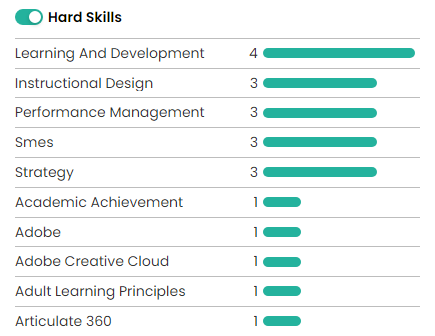
  • Those that appeal to me at a glance, I add to TealHQ. Teal is a free service to track jobs, note progress on applications, and make notes on interactions. One feature I especially like with Teal is that when you add a job, it notes keywords included in the job descriptions and any listed salary range.
  • I add jobs including Technical Training Specialist I-III (remote/Hybrid), Commercial Lines Training Specialist, and a few Training Specialist roles.
  • ​For now, I add jobs that interest me into TealHQ. However, I err on the side of adding something for further consideration.

I have now reduced the number of jobs that interest me to 31 roles.

Step 4: More Detailed Job Listing Review

Now that I have those 31 jobs in Teal, I look more closely at the following:
​
  • Identifying the work arrangements (onsite, hybrid, remote) and comments about these within the job description.
  • Ensuring I have the required and many top skills listed.
  • Assessing if the roles look like a good overall fit.
  • Noting any information about salary range.

I remove jobs where I am not eligible. This includes the following:

  • A required credential I don't currently possess or want to pursue.
  • A hybrid role in a state where I do not live. 
  • An organization who can not hire someone who lives in my current state of residence.

I remove jobs with anything that might be a dealbreaker for me. This includes the following:

  • A focus area that doesn't appeal to me.
  • A commute that I won't be happy with longer term. 
  • A job description that asks for a wide variety of skills with a low salary.

For the remaining jobs, I give them an initial rating of 1-5 stars and make notes on any areas I might want to explore further.

I now have 18 jobs in Teal. 

Step 5: A Little More Research

Next, I investigate a few things outside of the immediate job descriptions. 

  • I visit LinkedIn and see if I know anyone with the company who could give me additional information, put in a good word for me, or refer me for a role.
  • For a remote role that doesn't include a list of eligible states, I search LinkedIn to see if the company has employees who are currently living in my state of residence. This may indicate if they can hire people in my state.
  • I follow the company on LinkedIn and anyone involved in the hiring process.
  • I click the apply link to ensure it works, the position is still open, and they are still accepting applications.
  • I do a quick Google News search on the organization to see if and how they show up in the news. 
​
Now, I have 13 jobs In Teal.

Step 6: Customize a Resume and Prepare to Apply

​From the 13 jobs I have listed, I will apply for the jobs I'm most excited about and continue to reassess other openings listed. I will also add, remove, reprioritize, and take notes on specific roles as needed. 

Learn More

  • The Layoff Lady: Career Planning - Figuring Out What You Want To Be Next 
  • TealHQ.com
  • The Layoff Lady's Ultimate Guide To Answering The Question, "I Just Got Laid Off--Now What Do I Do?"​
  • The Layoff Lady Book: Seven Lessons From Seven Layoffs: A Guide​​
1 Comment
Debbie Petru link
4/18/2025 03:09:53 am

Wowza! This is excellent advice, Brenda. I love how you clearly walk through the online job search process with each step. And thanks for the Teal app info! I didn’t know that was an available tool.

Reply

Your comment will be posted after it is approved.


Leave a Reply.

    Picture
    Check out
    ​The Layoff Lady's Ultimate Guide To Answering The Question, "I Just Got Laid Off--Now What Do I Do?"

    Picture

    Author

    7-time layoff survivor Brenda L. Peterson, The Layoff Lady, waxes poetic on layoffs, job transitions, & career resilience.

    Buy The Book!
    Picture
    Were you recently laid off? Need a roadmap for what's next? Or planning just in case? Check out my book, Seven Lessons From Seven Layoffs: A Guide!​

    Categories

    All
    Career Resilience
    Career Transition
    Compensation
    Contingency Planning
    Energy Management
    Experience Your Emotions
    Health Insurance
    Interviewing
    Job Applications
    Job Searching
    Just Laid Off
    Layoff Book
    Layoff Finances
    Layoff Lessons
    Learning And Development
    LinkedIn
    Portfolio
    Professional Networking
    Resume
    Salary Range
    Self Awareness
    Self Care
    Seven Layoff Lessons
    Support System
    Survival Budget
    Telling Your Story
    Time Management
    Work Samples

    Archives

    November 2025
    October 2025
    September 2025
    August 2025
    July 2025
    June 2025
    May 2025
    April 2025
    March 2025
    February 2025
    January 2025
    December 2024
    November 2024
    October 2024
    September 2024
    August 2024
    June 2024
    May 2024
    April 2024
    March 2024
    February 2024
    January 2024
    December 2023
    November 2023
    October 2023
    January 2023

Brenda L. Peterson, The Layoff Lady Copyright ©2025
  • Blog
  • Seven Layoffs Book
  • Events
  • Media
  • About
  • Contact